Glen Burnie, Anne Arundel County, MD
Replacing and Installing Fences on Glen Burnie's Older Lots
Most Glen Burnie fence jobs start with an old fence. In neighborhoods where more than two in five homes predate 1970, the chain-link and stockade fences that went in with the houses are rusting, leaning, or held up with wire and zip ties, and the lots are small enough that a neighbor's failing fence is your problem too. Roso removes the old fence and installs wood privacy, vinyl, and aluminum fencing, with posts set in concrete below frost depth.
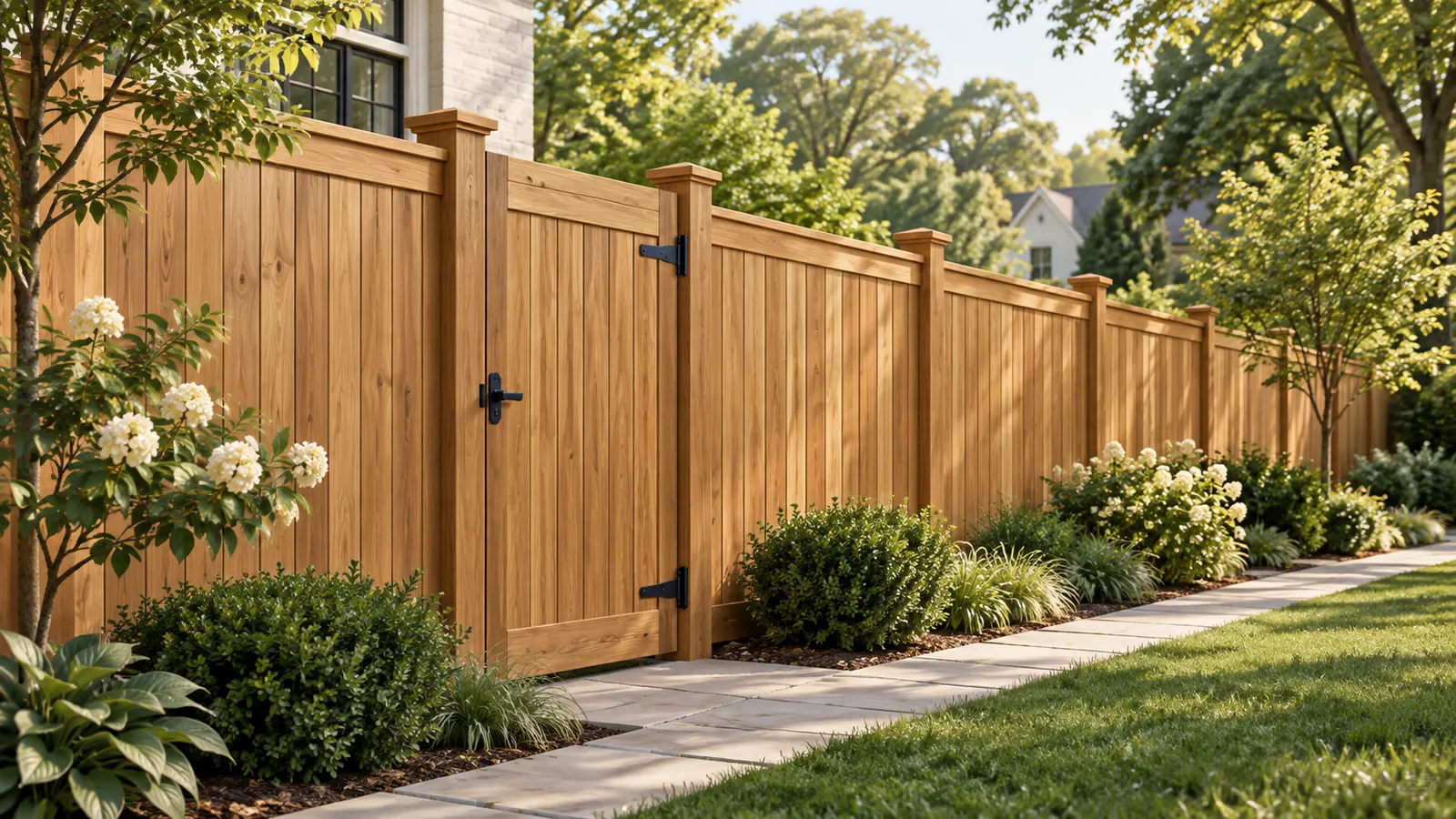
Anne Arundel County reviews fences in unincorporated communities like Glen Burnie as residential accessory structures, with attention to height, corner-lot sight lines, and pool enclosures. On the Linthicum and Ferndale side, properties inside the BWI airport zoning district have an extra step, a Maryland Aviation Administration airport zoning permit that comes before any county permit. Along Marley, Furnace, and Stony creeks, the Critical Area buffer can change where a fence line runs.
Planning locally
What to know before building a fence in Glen Burnie
- County review as a residential accessory structure
- Anne Arundel County lists fences among residential accessory structures. Whether a permit is required depends on height, whether the lot is a corner lot, and whether the fence encloses a pool or sits on a waterfront lot, and the rules vary by zoning district, so confirm for your property. Anne Arundel County also requires a waiver for a fence in the 100-year floodplain. We check the rule for your address before quoting. Source: Anne Arundel County, Residential Accessory Structure permit
- Airport zoning district on the Linthicum and Ferndale side
- Inside the BWI Marshall Airport zoning district, a Maryland Aviation Administration airport zoning permit is a prerequisite to construction. Whether a residential fence triggers it depends on the district rules for your address; we confirm before ordering materials. Most Glen Burnie lots sit outside the district and skip this step. Source: Maryland Aviation Administration, Airport Zoning Districts
- Creek-front lots and the Critical Area buffer
- On Marley, Furnace, and Stony creeks, the 100-foot Critical Area buffer limits clearing and ground disturbance, so a fence line running to the water may need a buffer management plan or a different route. Inland Glen Burnie lots are unaffected. Source: Anne Arundel County, Critical Area program
- Shared lines on small grid lots
- Older Glen Burnie fences were often built where it was convenient rather than on the surveyed line, and after fifty years neighbors treat the old fence as the boundary. We ask for your plat, look for pins, and recommend a survey when neither settles the question, because a fence built a foot onto the neighbor's lot can be ordered removed.
Requirements vary by property and change over time. We confirm the current rules for your address as part of every estimate rather than assuming.
Design and materials
Fences that suit Glen Burnie homes
What Roso builds
- Wood privacy fence
- Picket and decorative wood
- Vinyl privacy and picket
- Aluminum ornamental
- Gates and hardware
- Fence removal and replacement
- Board-on-board where houses sit close together
- When the neighbor's back door is 30 feet from yours, a six-foot board-on-board fence in pressure-treated pine or a vinyl privacy panel does the screening job. Board-on-board overlaps the pickets so the gaps that open as wood dries over a few Maryland summers never show, which matters when the fence is the view from your kitchen window.
- Vinyl when the fence is the backdrop
- On a small lot the fence is visible from every rear window, so weathering shows quickly. Vinyl privacy fencing in white or tan keeps its color without staining or painting, and it tolerates the damp, shaded conditions under the mature trees in the older neighborhoods better than unfinished wood. The trade-off is a higher up-front cost and fewer style options.
- Gates where the side yard is the only way through
- Older Glen Burnie houses often have a narrow side yard as the only path to the back. A four-foot walk gate on each side, with heavier posts than the line posts and a drop rod on the wider gate, keeps the mower, the trash cans, and the wheelbarrow moving without lifting anything over the fence.
Scope and estimate
What shapes a fence estimate
We price after a site visit, not from a form. These are the factors your written estimate will itemize.
Linear footage
Fence is priced largely by the foot, so longer runs cost more but usually less per foot.
Material and style
Pressure-treated privacy is typically the most economical; cedar, vinyl, and aluminum cost more per foot.
Height
Taller fences use longer posts and more material and may require a permit or variance.
Gates
Each walk or drive gate adds hardware and labor. Wide drive gates need heavier posts.
Terrain and obstacles
Slopes, rock, roots, tight access, and existing fence removal all add time.
Corners and ends
Complex layouts with many corners need more posts and cuts than a simple rectangle.
How it works
From estimate to finished fence
Step 1: Estimate request
Tell us the purpose of the fence, rough footage if you know it, and your ZIP code.
Step 2: Site walk and layout
We locate the property line with you, measure runs, note grade changes and obstacles, and discuss style and gate locations.
Step 3: Written estimate
Footage, style, height, gates, and any removal itemized so you can compare options.
Step 4: Permits, HOA, and utility marking
We confirm whether your county requires a permit at your height, help with HOA submittals, and have utilities marked before digging.
Step 5: Installation and walkthrough
Posts, rails, panels, and gates installed, debris removed, and a final walkthrough with you.
FAQs
Fences in Glen Burnie: your questions
Answers specific to fence projects in Glen Burnie. General fences questions are covered on our main fences page.
Anne Arundel County treats fences as residential accessory structures, and whether a permit is required depends on height, corner-lot position, pool enclosure, and waterfront status, with rules that vary by zoning district. Because Glen Burnie is unincorporated, the county is the only permitting authority for most lots. We confirm the requirement for your address and file the application when one is needed.
Only if your property is inside the BWI Marshall Airport zoning district, which covers the Linthicum and Ferndale side of the Glen Burnie area. There, a Maryland Aviation Administration airport zoning permit comes before any county permit, and we confirm whether a residential fence at your height triggers it. Outside the district, which is most of Glen Burnie, it does not apply.
Find the true line first. We work from your plat and look for survey pins; if the pins are gone, a survey before installation costs far less than moving a fence later. Once the line is known, we talk with you about whether to set the new fence on the line, a few inches inside it, or to keep the old alignment by agreement with the neighbor in writing.
Usually not all the way. Creek-front lots are in the Critical Area, and the 100-foot buffer along tidal water limits clearing and ground disturbance, so a fence through it may need a buffer management plan. We typically stop the fence at the buffer line or route it around shoreline vegetation, and we confirm the buffer location on the county's map for your lot.
Vinyl and aluminum, because neither rots or grows mildew in the damp shade under mature trees. Pressure-treated wood lasts well too when posts are set in concrete below frost depth and the fence is cleaned and sealed periodically, and it remains the least expensive full-privacy option. We set post spacing to miss large roots and hand-dig near trunks rather than cutting through them.
Removal and disposal of the old fence adds about half a day to a typical Glen Burnie yard, so most replacement jobs run one to three days on site once materials are delivered and utilities are marked. Concrete around the new posts needs a day to cure before gates are hung. Any county review happens before we start.
Free estimate
Request a free fence estimate in Glen Burnie
Tell us about your Glen Burnie project. We'll follow up to schedule a site visit and send a written estimate.
What happens next
- Tell us about your project. Send the estimate form or call. Share your project type, ZIP code, and what you have in mind so we can prepare for the conversation.
- Site visit and measurements. We walk the property with you, measure, check grade and access, and talk through layout, materials, and anything that affects cost.
- Written estimate. You receive a written estimate that spells out scope, materials, and price so you can compare options and ask questions before deciding.
- No cost, no obligation
- Your details are used only to discuss your project
Prefer to talk? (410) 871-8175
More in and around Glen Burnie
Other services in Glen Burnie
Ready to plan your Glen Burnie fence?
Send a few details and we'll follow up to schedule a site visit and prepare a written estimate. No cost, no obligation.