Fence installation
Fencing That Gives You Privacy, Safety, and a Cleaner Property Line
Roso installs wood, vinyl, and aluminum fences for yards, pools, and pets across Baltimore, Howard, Anne Arundel, and Carroll counties, set straight, set deep, and built to hold up through Maryland winters.
Serving Baltimore, Howard, Anne Arundel, and Carroll counties, Maryland.
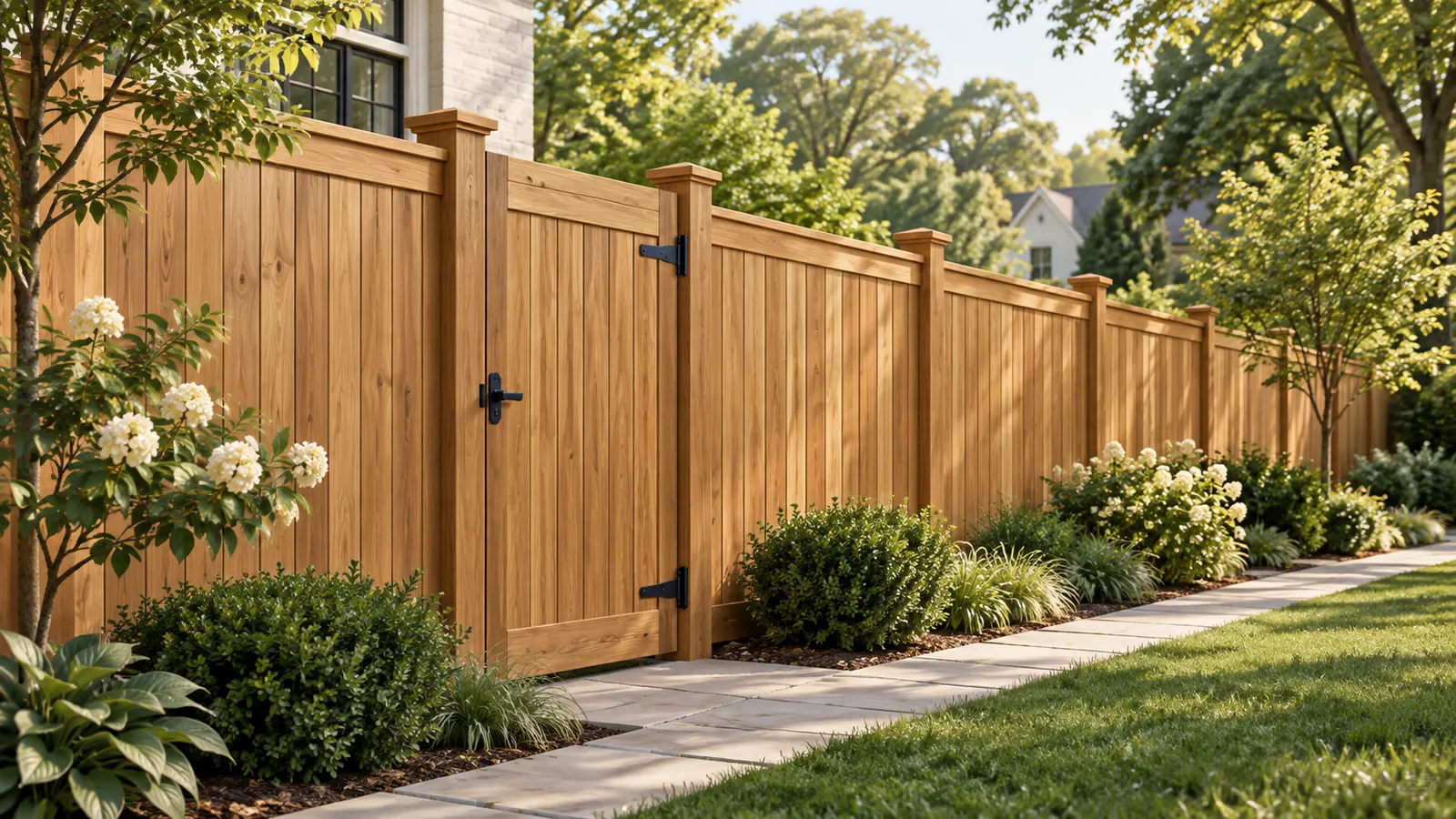
A good fence does quiet work every day: it keeps kids and dogs in, keeps sightlines out, and gives a yard a finished edge. A poorly set fence leans within a few winters and becomes the first thing you notice from the kitchen window.
Roso installs fences with posts set below frost depth in concrete, consistent spacing and heights, and gates that still swing true years later. We talk through property lines, grade changes, and county height limits before the first hole is dug.
Options
Fence styles and materials
Style is driven by what the fence needs to do. Here is what homeowners in our area most often request. Specific product lines and colors are confirmed during your estimate.
Wood privacy fence
Six-foot board-on-board or solid-board fences in pressure-treated pine or cedar for full backyard privacy.
Picket and decorative wood
Lower, open pickets for front yards and gardens that define space without walling it off.
Vinyl privacy and picket
Low-maintenance PVC fencing that never needs staining, in privacy, semi-privacy, and picket styles.
Aluminum ornamental
Rust-resistant metal fencing for pools, front yards, and views you want to keep. Common where pool-barrier rules apply.
Gates and hardware
Walk gates and double drive gates sized for mowers, vehicles, or trailers, with self-closing hardware where required.
Fence removal and replacement
Tear-out and haul-away of an old fence before installing new.
Chain link and split rail
Ask usUtility and farm-style fencing for large or rural lots.
Availability confirmed during your estimate.
Horizontal-board and modern styles
Ask usContemporary horizontal slat designs in wood or composite.
Availability confirmed during your estimate.
What to consider
Privacy, pets, pools, and property lines
A few decisions early in planning save headaches later. These are the ones we walk through on every fence estimate.
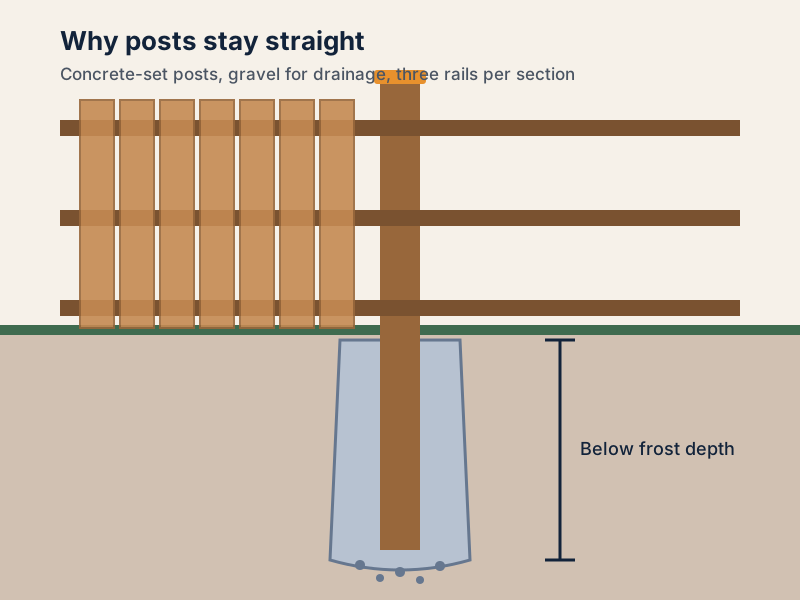
Posts set below frost depth keep a fence straight for years.
- Know where the line is
- A fence built even a foot over the property line can become a dispute or a required tear-out. Your plat or a survey shows the boundary. If markers cannot be found, a survey before installation is money well spent.
- Height limits and front yards
- Counties limit fence height, and front yards are usually restricted more than side and rear yards. Baltimore County, for example, limits residential fences to 42 inches in a front yard and 6 feet in side and rear yards under its zoning regulations. We confirm the limits for your lot before quoting.
- Privacy versus airflow and light
- Solid privacy fences block sightlines but also breeze and afternoon light. Semi-privacy styles with small gaps, or a lattice top, give most of the screening with less of the boxed-in feeling.
- Pets and gaps
- Small dogs squeeze under gaps at grade and big dogs test gate latches. We set bottom rails close to the ground on level lots, step or scribe panels on slopes, and recommend latches based on who is doing the escaping.
- Pools and safety
- Pool barriers have specific rules for height, climbability, and self-closing, self-latching gates. Aluminum and vinyl are common choices because they meet those rules with little upkeep.
- Easements and utilities
- Utility and drainage easements often run along rear and side lines. Fences in easements can be removed by the utility at your expense. We check the plat and call for utility marking before digging.
Why homeowners choose Roso
What you get with a Roso fence
Straight lines, deep posts
Posts set below frost depth in concrete, consistently spaced, so the fence stays plumb through freeze and thaw.
Right material for the job
Wood for warmth and value, vinyl for zero staining, aluminum for pools and views. We recommend based on your yard and budget.
Property-line and rule guidance
Help understanding height limits, setbacks, easements, and HOA requirements before anything is built.
Gates that keep working
Properly hung, braced gates with hardware chosen for pets, pools, or equipment access.
How it works
From first call to final walkthrough
Step 1: Estimate request
Tell us the purpose of the fence, rough footage if you know it, and your ZIP code.
Step 2: Site walk and layout
We locate the property line with you, measure runs, note grade changes and obstacles, and discuss style and gate locations.
Step 3: Written estimate
Footage, style, height, gates, and any removal itemized so you can compare options.
Step 4: Permits, HOA, and utility marking
We confirm whether your county requires a permit at your height, help with HOA submittals, and have utilities marked before digging.
Step 5: Installation and walkthrough
Posts, rails, panels, and gates installed, debris removed, and a final walkthrough with you.
Pricing factors
What determines the cost of a fence
We don't publish flat prices because every property is different, but these are the factors that move the number. Your written estimate itemizes each of them.
Linear footage
Fence is priced largely by the foot, so longer runs cost more but usually less per foot.
Material and style
Pressure-treated privacy is typically the most economical; cedar, vinyl, and aluminum cost more per foot.
Height
Taller fences use longer posts and more material and may require a permit or variance.
Gates
Each walk or drive gate adds hardware and labor. Wide drive gates need heavier posts.
Terrain and obstacles
Slopes, rock, roots, tight access, and existing fence removal all add time.
Corners and ends
Complex layouts with many corners need more posts and cuts than a simple rectangle.
FAQs
Fences questions, answered
Straight answers to what homeowners ask most before starting.
Fence cost is driven by linear footage, material, height, and the number of gates. A basic pressure-treated privacy fence costs less per foot than cedar, vinyl, or aluminum. Slopes, tree roots, rock, and removing an old fence add labor. After a site walk we provide a written estimate that lists footage, style, gates, and removal separately so you can see what each choice costs.
It depends on the county and the height. Carroll County does not require a fence permit unless the fence exceeds 10 feet. Howard County requires a permit for fences taller than 6 feet. Baltimore County and Anne Arundel County process fence permits through their permit offices and enforce zoning height limits. Towns inside each county can have their own rules. We confirm what applies to your property before quoting.
Most counties allow up to 6 feet in side and rear yards, with lower limits in front yards. Baltimore County caps front-yard fences at 42 inches and side and rear fences at 6 feet unless the fence is set back farther from the line. Corner lots and yards that border a street often have extra sight-distance rules. We check your zoning and your HOA covenants before recommending a height.
Yes. A fence built over the line can be challenged by your neighbor or the county. Your plat shows the boundary and any easements, and property pins can often be located. If there is any doubt, a professional survey before installation is inexpensive compared to moving a fence.
Aluminum and vinyl last longest with the least maintenance because they do not rot or need staining. Pressure-treated and cedar wood fences last well when posts are set correctly and the fence is cleaned and sealed periodically, and wood remains the most economical option for a solid privacy fence.
Yes. On gentle slopes we follow the grade so the fence top runs parallel to the ground. On steeper ground we step the panels or custom-cut boards so there are no large gaps at the bottom. The right method depends on the style and on whether the goal is privacy, pet containment, or looks.
Most HOAs require architectural approval and often limit style, height, color, and placement. Approval is separate from any county permit. We can supply a drawing and material description for your submittal.
Yes. Removal and haul-away is quoted as a line item on your estimate. If part of the existing fence is shared with a neighbor, it is worth a conversation with them before removal.
A typical residential fence is installed in one to three days on site once materials are in hand and utilities are marked. Post concrete cure time may extend the schedule by a day. Permit review, when required, happens before installation and varies by county.
Free estimate
Request your free estimate
Tell us about the project. We'll follow up to schedule a site visit and send a written estimate you can review at home.
What happens next
- Tell us about your project. Send the estimate form or call. Share your project type, ZIP code, and what you have in mind so we can prepare for the conversation.
- Site visit and measurements. We walk the property with you, measure, check grade and access, and talk through layout, materials, and anything that affects cost.
- Written estimate. You receive a written estimate that spells out scope, materials, and price so you can compare options and ask questions before deciding.
- No cost, no obligation
- Your details are used only to discuss your project
Prefer to talk? (410) 871-8175
Ready to plan your project?
Send a few details and we'll follow up to schedule a site visit and prepare a written estimate. No cost, no obligation.