Columbia, Howard County, MD
Paver Patios for Columbia Homes, Village Approval Included
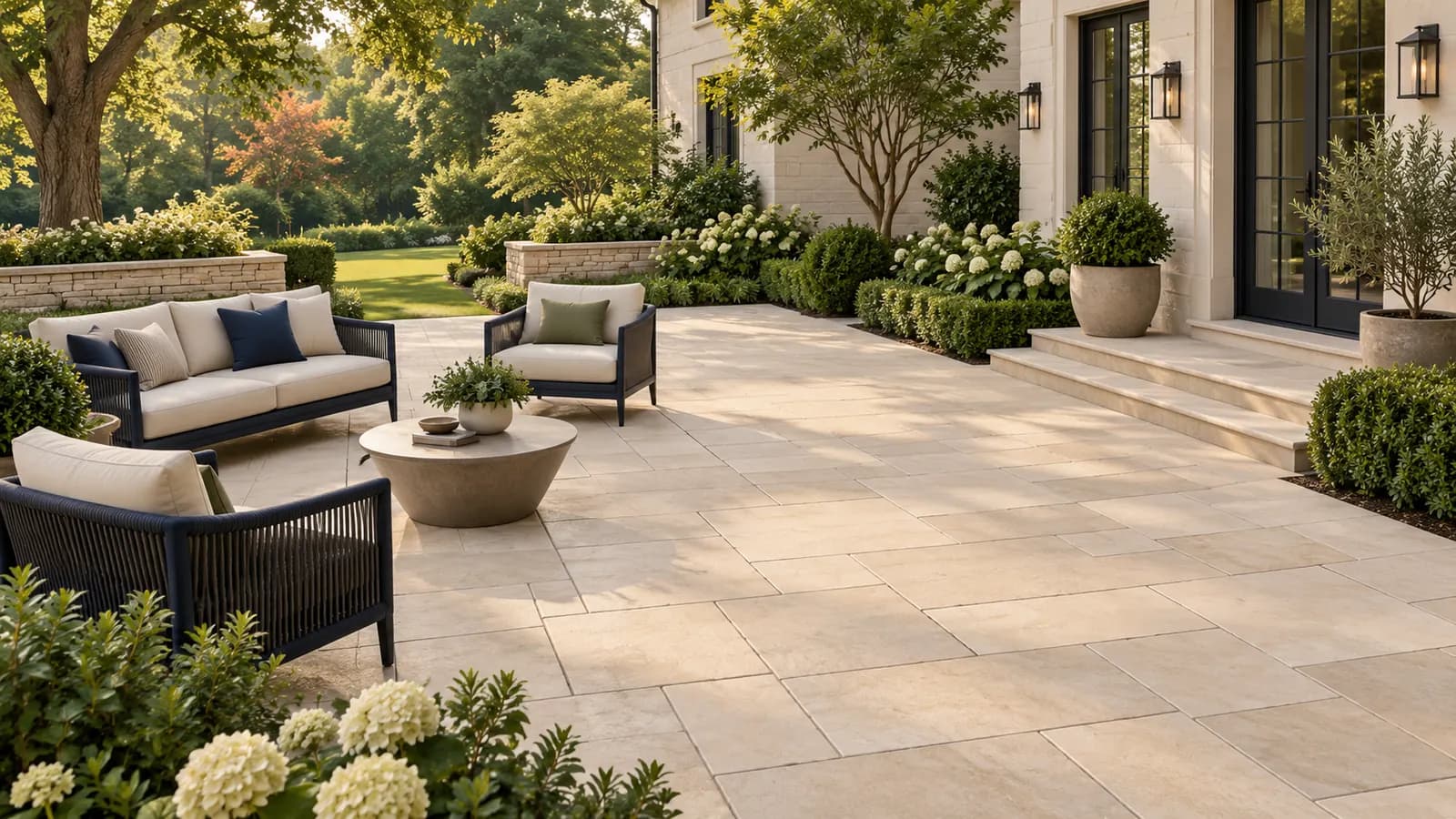
A patio is often the second outdoor project on a Columbia lot: the original 1970s or 1980s deck has been replaced or shrunk, and the homeowner wants a level place at grade for a table, a fire pit, and the grill. Roso builds paver patios, walkways, seating walls, and fire pit areas throughout Columbia's villages, from the contemporaries of Wilde Lake and Harper's Choice to the 1990s homes of Dorsey's Search and River Hill, on a compacted stone base built for Howard County's clay.
Columbia's village covenants treat hardscape as an exterior alteration. Patios, walls, and walkways generally go to the village architectural committee on the same Exterior Alteration Application used for decks and fences, with a typical three-to-four-week review, and Howard County considers that approval separate from any permit of its own. On-grade patios in most cases need no county building permit, but grading, easement, and drainage rules can still apply. We confirm your village and covenant status, then design a patio that clears both.
Planning locally
What to know before building a patio in Columbia
- Village committee review of hardscape
- Columbia villages review patios, walls, and other visible exterior changes under their recorded covenants, not just decks and fences. The Exterior Alteration Application typically takes three to four weeks, and committees usually ask for a site plan, paver color, and wall material. Howard County lists the committee contact for each village. We provide the layout drawing and samples. Source: Howard County DPZ, Columbia village architectural review committee contacts
- Howard County: no building permit in most cases, but grading rules apply
- Howard County has no published requirement for a building permit on an on-grade patio, and in most cases none is needed. Grading permits apply above the county's disturbance thresholds, and a large terraced patio with retaining walls can approach them. Village approval does not substitute for any county requirement that does apply. We confirm with the county when a project is borderline. Source: Howard County Department of Inspections, Licenses and Permits
- Open-space edges and drainage easements
- Many Columbia lots back onto village open space or carry drainage easements along the rear line. Hardscape in an easement can be required to be removed, and committees are attentive to runoff toward pathways and common land. We read the plat for easements and set the patio pitch so water leaves the surface without crossing onto neighbors or open space. Source: Columbia Association, villages
Requirements vary by property and change over time. We confirm the current rules for your address as part of every estimate rather than assuming.
Design and materials
Patios that suit Columbia homes
What Roso builds
- Concrete paver patios
- Walkways and front entries
- Seating walls and steps
- Fire pit areas
- Patio expansion and replacement
- Pair a smaller deck with a larger patio on 1970s contemporaries
- Original decks on Wilde Lake and Oakland Mills homes were often narrow. When one is replaced, a modest deck at door height with a stair to a wide paver patio usually costs less per usable square foot than a big elevated deck and gives you a fire pit zone that a deck cannot safely hold. The patio also anchors a lower level on walk-out lots.
- Colors and materials that clear review
- Committees tend to approve tumbled or textured pavers in tan, brown, and charcoal blends and low walls in matching block or natural-toned stone. Large bright-white or stark gray slabs read as modern against 1970s and 1980s siding and draw revisions. Choosing from the earth-toned families up front avoids a second submittal.
- Base built for clay and tree roots
- Columbia's soils are heavy clay and its trees are mature. We excavate below topsoil, compact crushed stone base in layers, deepen it where the subgrade stays wet, and route the patio edge around major roots rather than cutting them. Edge restraint and polymeric sand keep the surface tight through freeze-thaw cycles.
Scope and estimate
What shapes a patio estimate
We price after a site visit, not from a form. These are the factors your written estimate will itemize.
Square footage
Larger patios cost more overall but usually less per square foot.
Paver selection
Standard concrete pavers are the most economical; premium textures, large-format slabs, and natural stone cost more.
Base and drainage work
Poor soils, deeper base, drains, and regrading add excavation and material.
Walls, steps, and borders
Seating walls, steps, contrasting borders, and inlays add material and skilled labor.
Access and demolition
Tight access for equipment and removal of an existing slab or patio add time.
Pattern complexity
Simple running-bond patterns install faster than herringbone, circles, or multi-size random patterns.
How it works
From estimate to finished patio
Step 1: Estimate request
Tell us how you want to use the space, the rough size, and your ZIP code.
Step 2: Site visit and layout
We measure, check slope and drainage patterns, mark a proposed footprint, and discuss paver styles and features.
Step 3: Written estimate
Square footage, paver selection, walls, steps, and drainage work itemized so you can adjust scope.
Step 4: Approvals and materials
We check for HOA, grading, or Critical Area requirements where they apply and order materials once approved.
Step 5: Excavation, base, pavers, walkthrough
Excavation, compacted base, bedding, paver installation, edging, joint sand, cleanup, and a walkthrough with you.
FAQs
Patios in Columbia: your questions
Answers specific to patio projects in Columbia. General patios questions are covered on our main patios page.
In covenanted villages, yes. Patios and walls are exterior alterations that go to the village architectural committee on an Exterior Alteration Application, with review typically taking three to four weeks. Howard County treats that approval as separate from its own rules. We confirm your parcel is covenanted and provide the drawing and samples for the submittal.
In most cases an on-grade paver patio does not need a Howard County building permit. Grading permits apply above the county's disturbance thresholds, and easement and drainage rules can affect placement. Village approval does not replace any county requirement that applies. We identify these on the site visit and confirm with the county when a project is borderline.
Often, with care. Rear lines in Columbia frequently carry drainage easements, and hardscape in an easement can be required to be removed. Committees also watch runoff toward pathways and common land. We read your plat, keep the patio out of easements, and pitch the surface so water drains on your own property.
It depends on the door height. If the back door is close to grade, a patio replaces the deck entirely at lower long-term maintenance. If the door is a story up, a smaller deck with a stair to a larger patio is usually the best value and gives you a safe place for a fire pit. We measure and price both approaches when you ask.
Pavers. Clay soils here heave in winter and concrete slabs crack along those movements without a clean repair. Pavers on a compacted stone base flex with the ground, a settled area can be lifted and reset, and the textured, earth-toned products committees favor are paver products in the first place.
Allow three to four weeks for village review, then three to seven working days on site depending on size, excavation, and any walls or steps. Wet weather pauses base compaction. Any Howard County grading review, when a project is large enough to need it, happens before we start.
Free estimate
Request a free patio estimate in Columbia
Tell us about your Columbia project. We'll follow up to schedule a site visit and send a written estimate.
What happens next
- Tell us about your project. Send the estimate form or call. Share your project type, ZIP code, and what you have in mind so we can prepare for the conversation.
- Site visit and measurements. We walk the property with you, measure, check grade and access, and talk through layout, materials, and anything that affects cost.
- Written estimate. You receive a written estimate that spells out scope, materials, and price so you can compare options and ask questions before deciding.
- No cost, no obligation
- Your details are used only to discuss your project
Prefer to talk? (410) 871-8175
More in and around Columbia
Other services in Columbia
Ready to plan your Columbia patio?
Send a few details and we'll follow up to schedule a site visit and prepare a written estimate. No cost, no obligation.