Columbia, Howard County, MD
Fences That Pass Village Review in Columbia
Fencing in Columbia is as much about the covenants as the carpentry. Every one of the ten villages reviews fences through an Exterior Alteration Application, and committees in the older villages, Wilde Lake, Harper's Choice, Oakland Mills, Long Reach, and Owen Brown, were written with the planned community's open-space design in mind: open styles toward pathways, limits on solid privacy fencing, and specific expectations for color and height. Roso installs wood privacy, vinyl, and aluminum fences across Columbia and helps you choose a design the committee is likely to approve on the first pass.
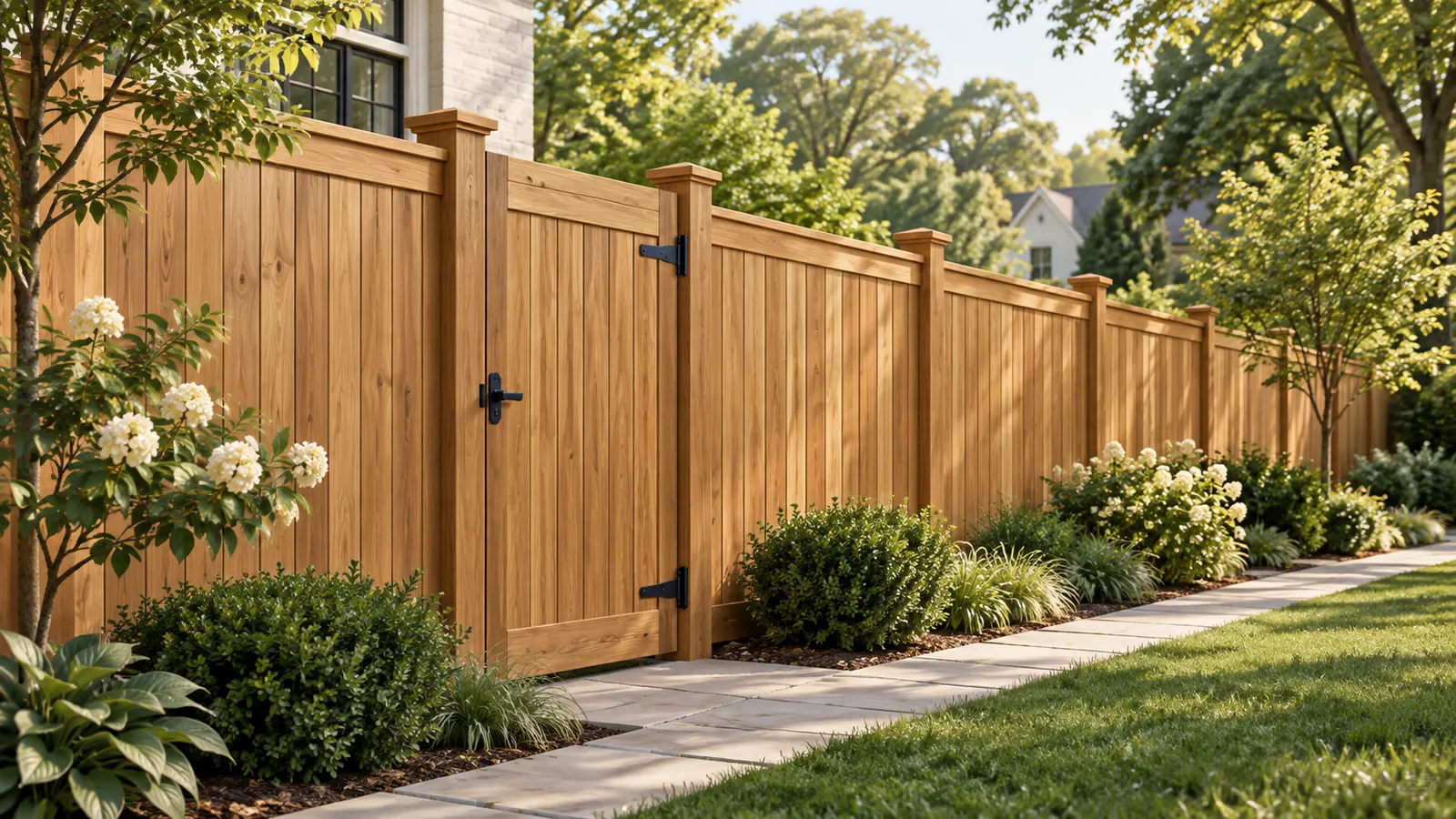
Layered under the covenants are Howard County's rules, which apply everywhere in Columbia because it is unincorporated. County zoning distinguishes open fences, more than half visibly open, from closed fences and applies setback rules to closed fences taller than 3 feet; a building permit is needed only for taller fences. Where a village covenant and a homeowners association both apply, the more restrictive rule governs, and where a parcel turns out not to be covenanted at all, only the county rules apply. We confirm which situation you are in before quoting.
Planning locally
What to know before building a fence in Columbia
- Exterior Alteration Application to your village
- Columbia village covenants require architectural committee approval for fences, with review typically taking three to four weeks. Committees usually want a plat showing the fence line, the style, height, material, and color. Long Reach publishes its review process, and Howard County lists committee contacts for all ten villages. We provide the drawing and material description for your submittal. Source: Long Reach Community Association, architectural review process
- Howard County zoning: open and closed fences
- County zoning treats fences that are more than 50 percent visibly open differently from closed fences, and closed fences over 3 feet are subject to setback rules that matter most in front yards and on corner lots. The county permit FAQ requires a building permit only for fences taller than 6 feet, though a fee schedule refers to fences over 7 feet, so we confirm the threshold for any taller fence. Source: Howard County, fence zoning regulations (Section 128.0.A.9)
- Covenant status varies parcel by parcel
- Not every property inside Columbia is covered by Columbia Association covenants, and some covenanted villages use Clarksville or Ellicott City mailing addresses. The village, not the ZIP code, decides which committee reviews your fence. We confirm your parcel's status at the site visit so you do not file with the wrong body or skip a review you needed. Source: Columbia Association, villages
Requirements vary by property and change over time. We confirm the current rules for your address as part of every estimate rather than assuming.
Design and materials
Fences that suit Columbia homes
What Roso builds
- Wood privacy fence
- Picket and decorative wood
- Vinyl privacy and picket
- Aluminum ornamental
- Gates and hardware
- Fence removal and replacement
- Open styles toward pathways and open space
- Many Columbia lots back onto village pathways or common open space, and committees typically resist a solid six-foot wall along those edges. A 4-foot black aluminum or spaced wood picket run reads as open under both the covenants and Howard County zoning, keeps the pathway feel intact, and still contains dogs and children. Solid panels are usually accepted between side yards.
- Semi-privacy where you want screening without a wall
- A board fence with small gaps, or a solid lower section with a lattice or spaced top, gives most of the privacy of a full panel while looking lighter from the neighbor's side. On 1980s colonial lots in Long Reach and Owen Brown, where rear yards are modest and close together, this style often satisfies both the committee and the homeowner.
- Replace the 1980s stockade with the same footprint
- Where an original pressure-treated stockade fence is failing, replacing it in kind on the same line is the simplest application to approve, and vinyl in an earth tone or a new board-on-board fence in the same height rarely draws objections. Moving the line or adding height is a new review, so we discuss that trade-off before drawing.
Scope and estimate
What shapes a fence estimate
We price after a site visit, not from a form. These are the factors your written estimate will itemize.
Linear footage
Fence is priced largely by the foot, so longer runs cost more but usually less per foot.
Material and style
Pressure-treated privacy is typically the most economical; cedar, vinyl, and aluminum cost more per foot.
Height
Taller fences use longer posts and more material and may require a permit or variance.
Gates
Each walk or drive gate adds hardware and labor. Wide drive gates need heavier posts.
Terrain and obstacles
Slopes, rock, roots, tight access, and existing fence removal all add time.
Corners and ends
Complex layouts with many corners need more posts and cuts than a simple rectangle.
How it works
From estimate to finished fence
Step 1: Estimate request
Tell us the purpose of the fence, rough footage if you know it, and your ZIP code.
Step 2: Site walk and layout
We locate the property line with you, measure runs, note grade changes and obstacles, and discuss style and gate locations.
Step 3: Written estimate
Footage, style, height, gates, and any removal itemized so you can compare options.
Step 4: Permits, HOA, and utility marking
We confirm whether your county requires a permit at your height, help with HOA submittals, and have utilities marked before digging.
Step 5: Installation and walkthrough
Posts, rails, panels, and gates installed, debris removed, and a final walkthrough with you.
FAQs
Fences in Columbia: your questions
Answers specific to fence projects in Columbia. General fences questions are covered on our main fences page.
In most cases, yes. Village covenants require an Exterior Alteration Application to the architectural committee before a fence is installed, and review typically takes three to four weeks. Committees look at style, height, color, and location relative to pathways and open space. We provide a drawing and material list for the application and confirm first that your parcel is actually covenanted.
Usually not for a fence 6 feet or under. Howard County's FAQ says a permit is required for fences taller than 6 feet, and a fee schedule refers to fences over 7 feet, so taller fences do need one. County zoning setback rules for closed fences over 3 feet apply either way, and village approval does not replace county requirements. We confirm the details for your property.
Open styles along pathways and open space, such as black aluminum or spaced picket at about 4 feet, and solid or semi-privacy wood or vinyl between side and rear yards in natural or earth tones. Bright white vinyl and tall solid fences facing common areas draw the most revisions. Each village writes its own guidelines, so we tailor the proposal to yours.
Dorsey's Search is a Columbia village, so its architectural committee reviews the fence despite the Ellicott City mailing address. Howard County rules apply as well, since the whole area is unincorporated. We identify the village from the parcel and prepare the application for the right committee.
Plan on three to four weeks for village review, then one to three days on site once utilities are marked and materials are in hand. Post concrete cures for a day before gates are hung. If the fence is tall enough to need a Howard County permit, that review runs alongside the village application.
Vinyl and aluminum hold up best under Columbia's tree canopy, where leaf litter and damp shade shorten the life of wood. Vinyl privacy panels do not rot and rinse clean; aluminum does not rust. Pressure-treated wood is still the most economical privacy fence and does well if posts are set correctly and the fence is cleaned and sealed periodically.
Free estimate
Request a free fence estimate in Columbia
Tell us about your Columbia project. We'll follow up to schedule a site visit and send a written estimate.
What happens next
- Tell us about your project. Send the estimate form or call. Share your project type, ZIP code, and what you have in mind so we can prepare for the conversation.
- Site visit and measurements. We walk the property with you, measure, check grade and access, and talk through layout, materials, and anything that affects cost.
- Written estimate. You receive a written estimate that spells out scope, materials, and price so you can compare options and ask questions before deciding.
- No cost, no obligation
- Your details are used only to discuss your project
Prefer to talk? (410) 871-8175
More in and around Columbia
Other services in Columbia
Ready to plan your Columbia fence?
Send a few details and we'll follow up to schedule a site visit and prepare a written estimate. No cost, no obligation.