
Roland Park-Homeland, Baltimore City, MD
Decks for Roland Park and Homeland Houses, Designed for Covenant Review
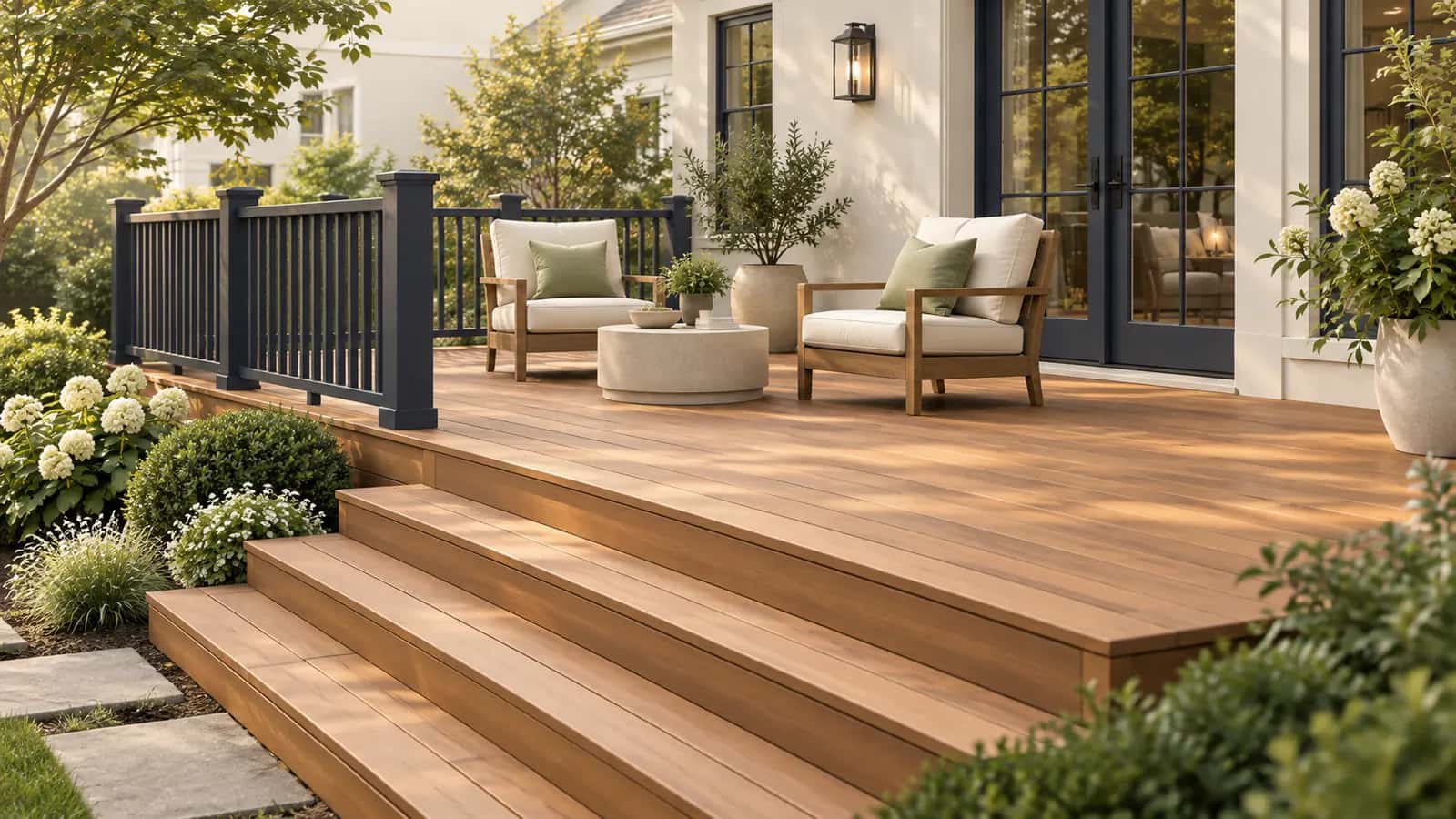
Roland Park and Homeland were planned as garden suburbs, Roland Park from the 1890s and Homeland from 1924, and their large houses on deep, tree-covered lots still follow recorded covenants that govern exterior changes. A deck here is rarely a first deck; more often it replaces a small original porch or a 1980s addition that no longer suits the house. Roso designs decks that sit comfortably against stucco, brick, and stone houses of that era, and prepares the drawings both the covenant reviewers and the city expect.
Two approvals apply. In Roland Park, the Roland Park Roads & Maintenance Corporation's Architectural Review Board reviews exterior changes; in Homeland, the Homeland Association's Deed and Agreement requires written approval before exterior work. Separately, Baltimore City requires a DHCD building permit for the deck. We sequence the covenant submission first, then pull the city permit, so the deck you approve is the one that gets built.
Planning locally
What to know before building a deck in Roland Park-Homeland
- Roland Park Architectural Review Board
- The Roland Park Roads & Maintenance Corporation states that its Architectural Review Board reviews exterior changes to properties under the covenants, including patios, pools, and fences, and decks fall within the same exterior-change review. We prepare a dimensioned drawing, material list, and colors for the submission. Source: Roland Park Roads & Maintenance Corporation, Architectural Review Board
- Homeland Association written approval
- Homeland's Deed and Agreement requires written approval from the Homeland Association for exterior changes. A new or enlarged deck is an exterior change. Approval is separate from the city permit and should be in hand before construction starts. Source: Homeland Association, Deed and Agreement
- City permit; CHAP only where a block is in a local district
- Deck construction requires a DHCD permit through ePermits. Greater Homeland is a National Register district, which does not by itself trigger CHAP review, but some north-city blocks fall within CHAP local districts, so we check the map for your address and add a CHAP submission if it applies. Source: CHAP, Baltimore City historic districts
Requirements vary by property and change over time. We confirm the current rules for your address as part of every estimate rather than assuming.
Design and materials
Decks that suit Roland Park-Homeland homes
What Roso builds
- Attached decks
- Freestanding and ground-level decks
- Multi-level decks
- Deck replacement and rebuilds
- Railings, stairs, and built-in benches
- Scale the deck to a large house
- A Roland Park Shingle-style or Homeland Tudor house can make a 12-by-14 deck look like an afterthought. Deeper platforms, a wide stair to the lawn, and a railing detail borrowed from the house's porch or window muntins keep the addition in proportion.
- Materials that pass covenant review
- Reviewers here tend to favor painted or stained wood railings, substantial posts, and colors drawn from the house trim. Capped composite decking in a natural wood tone paired with wood or aluminum railings is commonly approved and cuts maintenance under the heavy tree cover.
- Work with the terrace and the trees
- Many lots step down from the house to a lawn through original stone walls and plantings. A deck that lands on the existing terrace, with footings placed to avoid the root zones of specimen trees, respects the landscape the covenants are meant to protect.
Scope and estimate
What shapes a deck estimate
We price after a site visit, not from a form. These are the factors your written estimate will itemize.
Size and shape
Square footage drives material and labor. Angles, curves, and multiple levels add framing and cutting time.
Decking material
Pressure-treated wood costs the least; capped composite and PVC cost more per square foot but need less upkeep.
Height and stairs
Elevated decks need longer posts, more bracing, and longer stair runs, each of which adds cost.
Railing system
Wood railing is economical. Composite, aluminum, cable, and glass systems range widely in price.
Site conditions
Slope, soil, tree roots, tight access, and removal of an existing deck all affect labor.
Extras
Lighting, built-in seating, privacy screens, pergolas, and under-deck drainage are priced as add-ons.
How it works
From estimate to finished deck
Step 1: Estimate request
Share your ideas, rough size, and ZIP code through the form or by phone.
Step 2: On-site design visit
We measure, check grade and door heights, discuss materials, and sketch a layout that fits your space.
Step 3: Written estimate
A clear scope with decking, railing, stairs, and any extras itemized so you can adjust before committing.
Step 4: Permit and materials
We handle county permit coordination and order materials once the plan is approved.
Step 5: Build, inspect, walkthrough
Footings, framing, decking, and railings, with county inspections as required and a final walkthrough with you.
FAQs
Decks in Roland Park-Homeland: your questions
Answers specific to deck projects in Roland Park-Homeland. General decks questions are covered on our main decks page.
Yes, in practice. The covenants require the association's approval for exterior changes, and the city permit does not replace it. We submit to the Roland Park Architectural Review Board or the Homeland Association first, resolve any comments, and then apply for the DHCD permit with the approved design so the two do not conflict.
The Department of Housing and Community Development's Plans Review and Permits office, through the city's online ePermits system. Baltimore City is its own jurisdiction, separate from Baltimore County, and its Permit Handbook lists deck construction as work that requires a permit. Roso is a licensed home-improvement contractor and handles the application, drawings, and inspections as part of the project.
Size and placement relative to the house and neighbors, railing style, materials and colors, how the deck is screened from the street and adjacent lots, and any lighting. The published Roland Park review scope names patios, pools, and fences, and decks are treated the same way. A complete submission with a drawing, elevation, and material samples avoids a second round.
Greater Homeland is listed on the National Register of Historic Places, which is honorary and does not add a city review. CHAP review applies only inside the city's designated local historic districts. A few north-city blocks fall within local districts, so we check the CHAP map for your specific address rather than assuming either way.
Below frost depth, on undisturbed soil. Baltimore City reviews the footing size and depth on the permit drawings and inspects the holes before concrete is placed. In older neighborhoods we often find fill, buried debris, or old foundations near the house, so we dig to solid bearing rather than to a minimum number, and we tell you if conditions change the plan.
Yes. Removing a porch and building a deck on the same footprint is a common request here. The porch roof and its connection to the house are addressed in the drawings, and covenant reviewers will want to see how the house looks with the porch gone. If you want to keep a covered area, a deck with a partial roof or pergola is an option that also needs both approvals.
Free estimate
Request a free deck estimate in Roland Park-Homeland
Tell us about your Roland Park-Homeland project. We'll follow up to schedule a site visit and send a written estimate.
What happens next
- Tell us about your project. Send the estimate form or call. Share your project type, ZIP code, and what you have in mind so we can prepare for the conversation.
- Site visit and measurements. We walk the property with you, measure, check grade and access, and talk through layout, materials, and anything that affects cost.
- Written estimate. You receive a written estimate that spells out scope, materials, and price so you can compare options and ask questions before deciding.
- No cost, no obligation
- Your details are used only to discuss your project
Prefer to talk? (410) 871-8175
More in and around Roland Park-Homeland
Other services in Roland Park-Homeland
Ready to plan your Roland Park-Homeland deck?
Send a few details and we'll follow up to schedule a site visit and prepare a written estimate. No cost, no obligation.