Fulton, Howard County, MD
Fences for Fulton, From Maple Lawn Streets to Acreage
In Maple Lawn, a fence is a design decision the association has largely made for you: the planned community's covenants specify styles, heights, and colors that keep its traditional streetscape consistent, and rear yards are small enough that a run of fence is measured in tens of feet. On the estate lots around Fulton, the fence might be measured in hundreds of feet, and the constraints are the well, the septic field, and the budget for that much material. Roso installs wood privacy, vinyl, and aluminum fencing in both settings, with posts set in concrete below frost depth.
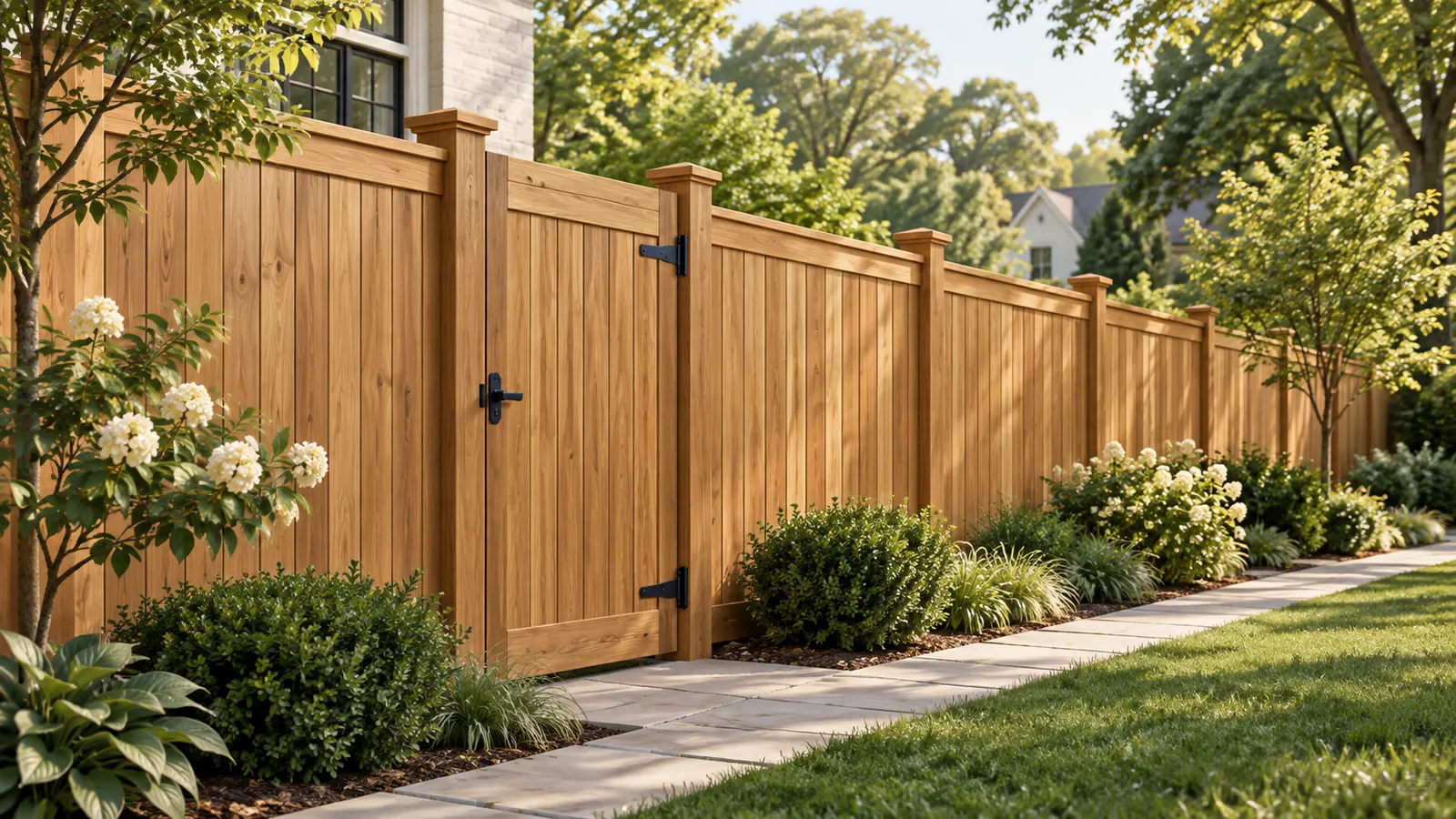
Howard County makes the rules for all of Fulton, including homes with Laurel mailing addresses, since the City of Laurel is a separate municipality in another county. County zoning separates open fences, more than half visibly open, from closed fences and applies setback rules to closed fences taller than 3 feet, and a building permit is needed only for taller fences. Maple Lawn's review sits on top of those rules; estate lots outside it answer only to the county.
Planning locally
What to know before building a fence in Fulton
- Howard County fence rules apply everywhere in Fulton
- Howard County's permit FAQ requires a building permit for fences taller than 6 feet, while a county fee schedule refers to fences over 7 feet; a 6-foot fence in most cases needs none. Zoning treats fences more than 50 percent visibly open differently from closed fences, and closed fences over 3 feet are subject to setback rules. Fulton is unincorporated, and Laurel-addressed homes here are still under Howard County, not the City of Laurel. Source: Howard County, fence zoning regulations (Section 128.0.A.9)
- Maple Lawn covenant review
- Maple Lawn's covenants require association architectural approval for fences, and the community's guidelines specify permitted styles, heights, and colors to keep streets consistent. Approval is separate from any county requirement. We confirm the current standard for your section of Maple Lawn and provide the plat drawing and material description for the submittal.
- Wells and septic fields on estate lots
- Fulton lots outside Maple Lawn are largely outside the county's sewer planned service area and rely on private wells and septic. Fence posts should not be set into a drainfield or reserve area, and the auger should stay clear of the well and its lines. The Howard County Health Department's well and septic program holds the records that show where these are, and we locate them before laying out the fence. Source: Howard County, sewer planned service area map
Requirements vary by property and change over time. We confirm the current rules for your address as part of every estimate rather than assuming.
Design and materials
Fences that suit Fulton homes
What Roso builds
- Wood privacy fence
- Picket and decorative wood
- Vinyl privacy and picket
- Aluminum ornamental
- Gates and hardware
- Fence removal and replacement
- Match Maple Lawn's palette
- Maple Lawn's traditional architecture calls for fences that look like part of the design: white or black aluminum and painted-look vinyl picket toward the street, and privacy panels only where the guidelines allow them between rear yards. Choosing from the approved styles up front avoids a second submittal, and matching adjoining fences keeps townhome rows uniform.
- Aluminum for long perimeter runs
- Fencing several acres in privacy panels is costly and blocks the open views estate owners paid for. A 4- or 5-foot black aluminum fence counts as open under Howard County zoning, contains dogs, meets pool-barrier rules with self-closing gates, and nearly disappears against a tree line. A short wood or vinyl privacy section near the patio covers the screening you actually need.
- Gates sized for equipment and septic access
- Estate lots need a drive gate wide enough for a tractor, trailer, or delivery truck, on heavier posts set deeper than the line posts, with a drop rod to keep the leaves aligned. The septic pump-out port must stay reachable, so we place a gate or a removable panel where the pumper truck needs to get in.
Scope and estimate
What shapes a fence estimate
We price after a site visit, not from a form. These are the factors your written estimate will itemize.
Linear footage
Fence is priced largely by the foot, so longer runs cost more but usually less per foot.
Material and style
Pressure-treated privacy is typically the most economical; cedar, vinyl, and aluminum cost more per foot.
Height
Taller fences use longer posts and more material and may require a permit or variance.
Gates
Each walk or drive gate adds hardware and labor. Wide drive gates need heavier posts.
Terrain and obstacles
Slopes, rock, roots, tight access, and existing fence removal all add time.
Corners and ends
Complex layouts with many corners need more posts and cuts than a simple rectangle.
How it works
From estimate to finished fence
Step 1: Estimate request
Tell us the purpose of the fence, rough footage if you know it, and your ZIP code.
Step 2: Site walk and layout
We locate the property line with you, measure runs, note grade changes and obstacles, and discuss style and gate locations.
Step 3: Written estimate
Footage, style, height, gates, and any removal itemized so you can compare options.
Step 4: Permits, HOA, and utility marking
We confirm whether your county requires a permit at your height, help with HOA submittals, and have utilities marked before digging.
Step 5: Installation and walkthrough
Posts, rails, panels, and gates installed, debris removed, and a final walkthrough with you.
FAQs
Fences in Fulton: your questions
Answers specific to fence projects in Fulton. General fences questions are covered on our main fences page.
In most cases not for a fence 6 feet or under. Howard County's FAQ requires a building permit for fences taller than 6 feet, and a fee schedule refers to fences over 7 feet, so taller fences do need one. Zoning setback rules for closed fences over 3 feet apply regardless. Fulton is unincorporated, so the county is the only permitting authority, and we confirm the requirement for your lot.
No. The City of Laurel is a separate municipality in Prince George's County and does not cover Howard County properties. A Fulton home with a Laurel 20723 address is under Howard County's zoning and permit rules, plus any covenant that applies to your community. We confirm the jurisdiction from the parcel record before quoting.
Maple Lawn's guidelines specify permitted styles, heights, and colors, generally traditional open picket or aluminum toward the street and limited privacy fencing between rear yards, with consistency along townhome rows. The association reviews every fence application. We confirm the current standard for your section and design to it so the application is approved on the first pass.
Posts should stay out of the drainfield and reserve area, and the auger should stay clear of the well and its water line. Augering into a field can break laterals, and equipment compacts the soil the system depends on. We pull the record from the Howard County Health Department's well and septic program, stake the system, and route the fence around it.
Black aluminum at 4 or 5 feet around the area you actually use, rather than privacy panels around the whole perimeter. It counts as an open fence under Howard County zoning, contains dogs, keeps the views, and does not rust. Add a smaller wood or vinyl privacy section near the patio or pool for screening. Fencing every acre in solid panels is rarely worth the cost.
Maple Lawn review comes first and varies. On site, a Maple Lawn rear yard is usually fenced in a day once utilities are marked; a long run on acreage takes several days and depends on gates and terrain. Post concrete cures for a day before gates are hung. Any Howard County permit for a taller fence is handled before scheduling.
Free estimate
Request a free fence estimate in Fulton
Tell us about your Fulton project. We'll follow up to schedule a site visit and send a written estimate.
What happens next
- Tell us about your project. Send the estimate form or call. Share your project type, ZIP code, and what you have in mind so we can prepare for the conversation.
- Site visit and measurements. We walk the property with you, measure, check grade and access, and talk through layout, materials, and anything that affects cost.
- Written estimate. You receive a written estimate that spells out scope, materials, and price so you can compare options and ask questions before deciding.
- No cost, no obligation
- Your details are used only to discuss your project
Prefer to talk? (410) 871-8175
More in and around Fulton
Other services in Fulton
Ready to plan your Fulton fence?
Send a few details and we'll follow up to schedule a site visit and prepare a written estimate. No cost, no obligation.