
Federal Hill-Locust Point, Baltimore City, MD
Parking Pads, Sidewalks, and Stoops for Federal Hill and Locust Point
On the south Baltimore peninsula, concrete work is rear parking pads off the alleys, the aprons and sidewalks that are city property, and the stoops and areaway steps that front every rowhouse. Roso pours reinforced pads sized to the narrow yards of Federal Hill, Riverside, and Locust Point, replaces aprons and sidewalks under the city's right-of-way permit, and rebuilds stoops on footings below frost, with marble resets where the original stone survives.
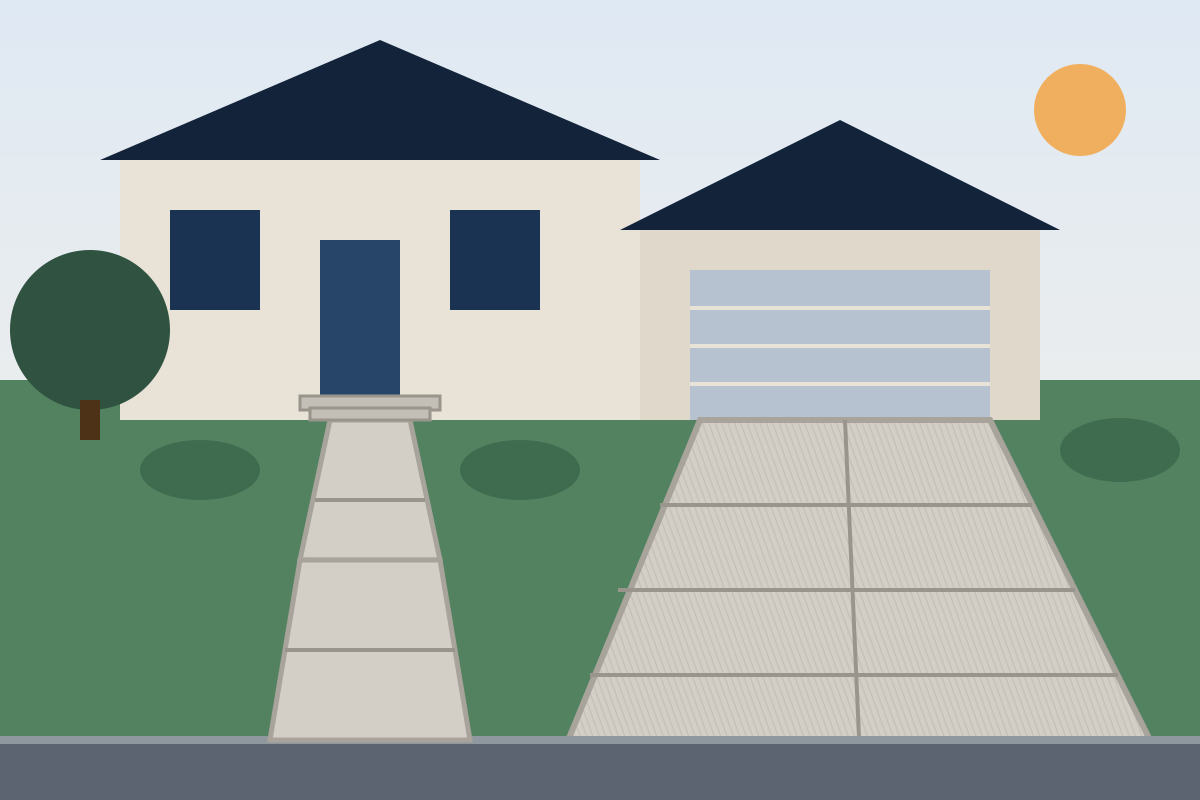
Federal Hill's CHAP local historic district reviews visible work, which includes a stoop, front steps, or a gate apron seen from the street; Locust Point and Riverside blocks outside the district need only the city permits. The Department of Transportation permits any apron or sidewalk work and approves new curb cuts only in limited cases, and some waterfront Locust Point lots fall within Critical Area mapping that regulates new paving. We check all of it from the address.
Planning locally
What to know before building a concrete in Federal Hill-Locust Point
- CHAP review for stoops and visible concrete in Federal Hill
- Inside the Federal Hill historic district, CHAP must authorize exterior work visible from the public way, and a stoop, front steps, or areaway wall qualifies. CHAP generally expects marble or stone stoops to be retained and reset, and new steps to match the streetscape. Rear pads hidden by the house do not usually need CHAP review. Source: CHAP, review procedures
- Right-of-way permits for aprons and sidewalks
- Any work on an alley apron, curb, or sidewalk needs a DOT right-of-way permit. Repairing an existing alley opening is routine; a new alley opening or a front curb cut is approved only in limited cases. Sidewalks are replaced to city specification under the same permit. Source: Baltimore City DOT, right-of-way permits (driveways, curb cuts, sidewalks)
- Waterfront lots and the Critical Area
- Locust Point properties within 1,000 feet of the harbor shoreline may fall within the Chesapeake Bay Critical Area or mapped floodplain, where new impervious surface can be regulated. Most peninsula rowhouse yards are not affected, but we confirm the mapping before adding a pad on a near-water lot. Source: Baltimore City DHCD, Plans Review and Permits
Requirements vary by property and change over time. We confirm the current rules for your address as part of every estimate rather than assuming.
Design and materials
Concrete that suit Federal Hill-Locust Point homes
What Roso builds
- Driveways and driveway replacement
- Walkways and sidewalks
- Steps and stoops
- Patio slabs
- Garage, shed, and equipment pads
- Decorative finishes
- Small block retaining and landing walls
- Reset the marble, rebuild the base
- Original marble stoops are worth saving. We lift the marble, pour a new reinforced base on frost-depth footings with an expansion joint at the house, and reset the stone level and pinned. Where marble is missing, a stone-capped concrete stoop keeps the look CHAP expects.
- Pads that shed water to the alley
- A 5-inch reinforced slab pitched toward the alley, a surface below the door threshold, and a channel drain or permeable strip at the alley end where the alley is higher keep water off the house. Leave a planting strip along a party wall if the yard allows.
Scope and estimate
What shapes a concrete estimate
We price after a site visit, not from a form. These are the factors your written estimate will itemize.
Square footage and thickness
Area is the main driver; driveways cost more per square foot than walkways because they are thicker and more heavily reinforced.
Demolition and haul-away
Breaking out and disposing of an old driveway or slab adds labor and dumping fees.
Access and grading
Tight side yards, long wheelbarrow runs, and slopes that need cut, fill, or a small wall add time.
Finish and color
Broom finish is the baseline; exposed aggregate, stamping, and integral color add material and labor.
Apron and curb work
Removing and replacing curb and gutter to the county detail, and the permit itself, are priced separately when the entrance changes.
Drainage features
Trench drains, pipe under the apron, or regrading toward a swale when water would otherwise run to the garage.
How it works
From estimate to finished concrete
Step 1: Estimate request
Tell us what you want poured, the rough size, and your ZIP code.
Step 2: Site visit and layout
We measure, check grades and drainage, look at the curb and apron, and mark the proposed footprint and joints.
Step 3: Written estimate
Square footage, thickness, reinforcement, finish, demolition of old concrete, and permit work itemized so you can adjust scope.
Step 4: Permits and utility marking
We coordinate any driveway, apron, or grading permits and have utilities marked before excavation.
Step 5: Demolition and base
Old concrete removed and hauled away, subgrade excavated, stone base placed and compacted, forms set to the planned grades.
Step 6: Pour, finish, and joints
Concrete placed and finished, joints cut, and the slab protected while it cures. We walk it with you and tell you when it is ready to use.
FAQs
Concrete in Federal Hill-Locust Point: your questions
Answers specific to concrete projects in Federal Hill-Locust Point. General concrete questions are covered on our main concrete page.
Only in limited cases. Any work in the public right-of-way, including a new or altered apron, curb cut, or sidewalk, needs a Department of Transportation right-of-way permit, and the city approves new residential curb cuts sparingly, generally where a lot has no alley access. Zoning also bars parking in a required front yard and sets driveway widths between roughly 10 and 35 feet. We check your lot's eligibility before we quote a new entrance; alley-served rear pads are the usual path.
If your house is inside the Federal Hill local historic district, yes; a stoop or front steps is exterior work visible from the street. CHAP typically expects existing marble to be retained and reset and new work to match the block. Riverside and Locust Point houses outside the district need only the city permit. We check the district map for your address and handle the CHAP submission where it applies.
In most cases an uncovered on-grade slab on private property does not need a building permit. A slab that supports a structure, a retaining wall, steps attached to the house, or any work touching the alley apron or public sidewalk does need a permit, the last through DOT. In a CHAP local historic district, concrete visible from the street is reviewed as well. We confirm with DHCD for your address and pull whatever applies.
If the yard opens onto an alley, yes; we pour the pad inside your property line and repair the alley apron under a DOT permit where needed. If there is no alley opening, a new one is a separate city review granted only in limited cases. On lots within 1,000 feet of the harbor we also confirm Critical Area mapping, which can regulate new paving.
Because steps tied to the house move with the ground if they are not founded below frost depth, and a heaving stoop cracks itself and the wall it is attached to. We pour attached steps and stoops on footings that reach below frost to solid bearing, isolate them from the foundation with an expansion joint, and pin them where the design calls for it. The city reviews attached steps as part of the structure, so a permit usually applies.
Yes. The sidewalk is city right-of-way, so we pull a DOT right-of-way permit and pour it to the city's specification, and in the Federal Hill district the finish is kept consistent with the block. Doing the sidewalk, stoop, and pad in one project saves mobilization and keeps the alley and street disruption to one window.
Free estimate
Request a free concrete estimate in Federal Hill-Locust Point
Tell us about your Federal Hill-Locust Point project. We'll follow up to schedule a site visit and send a written estimate.
What happens next
- Tell us about your project. Send the estimate form or call. Share your project type, ZIP code, and what you have in mind so we can prepare for the conversation.
- Site visit and measurements. We walk the property with you, measure, check grade and access, and talk through layout, materials, and anything that affects cost.
- Written estimate. You receive a written estimate that spells out scope, materials, and price so you can compare options and ask questions before deciding.
- No cost, no obligation
- Your details are used only to discuss your project
Prefer to talk? (410) 871-8175
More in and around Federal Hill-Locust Point
Other services in Federal Hill-Locust Point
Ready to plan your Federal Hill-Locust Point concrete?
Send a few details and we'll follow up to schedule a site visit and prepare a written estimate. No cost, no obligation.